Wood Mackenzie puts the average US wait for a new gas turbine at about six years, and well-maintained used units now sell for $1.5 million to $1.7 million per megawatt. In a market that hot, a second-hand machine is only as valuable as the service history that comes with it.
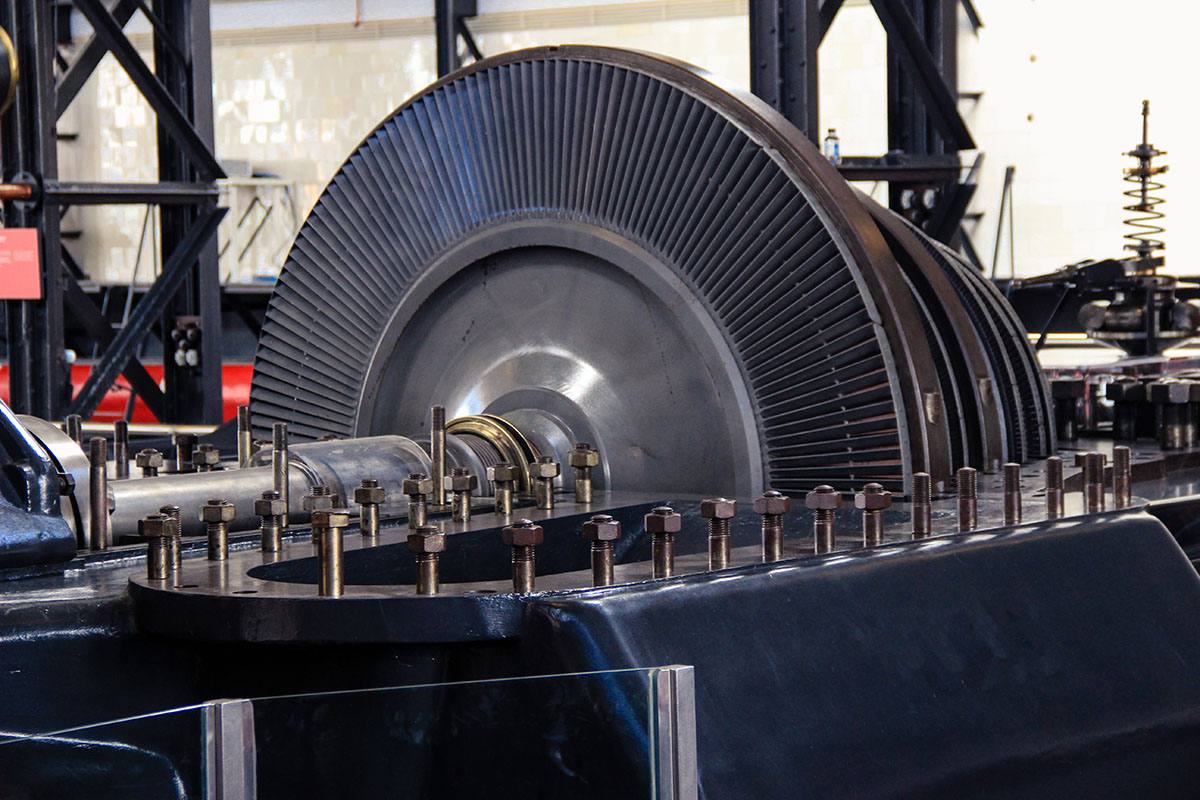
When new equipment cannot be had for years, the installed base becomes the supply chain. That is now happening in gas turbines, where data centre developers and other power buyers who cannot wait for a new unit are bidding for used machines and turning to generators derived from jet engines. The scramble is a power market story, but the lesson reaches every plant that runs long-lead rotating equipment. When the second-hand market is the only fast route to capacity, what a machine is worth depends less on its nameplate than on whether anyone can prove how it has been maintained.
The arithmetic is stark. As Decrypt reported on November 9, citing Reuters, global gas turbine orders now exceed 100 GW against estimated annual manufacturing capacity of 60 to 70 GW. Wood Mackenzie puts the average delivery time for a new turbine in the US at about six years, and delivery discussions are centred on 2030 and 2031. Siemens Energy, GE Vernova and Mitsubishi Heavy Industries have all reported orders running ahead of what they can build.
The order books confirm it. In its third-quarter results on October 28, GE Vernova said its gas power equipment backlog and slot reservation agreements grew from 116 GW to 122 GW, and that it expects at least 130 GW by the end of 2026. Total company backlog reached $197 billion. Turbomachinery Magazine noted that the quarter's orders included 55 heavy-duty gas turbines and 57 aeroderivative units. None of that shortens the line for a buyer joining it today.
So buyers have turned to what already exists. Used turbines in good condition now sell for about $1.5 million to $1.7 million per MW, against roughly $2 million to $2.5 million for new units, according to equipment brokers and analysts cited in the Decrypt report. One broker sold two smaller turbines totalling 29 MW for $12.5 million; equivalent new equipment would have cost about $35 million and taken five years to arrive. Ana Amicarella, chief executive of turbine service company EthosEnergy, told Reuters: “That secondary market is very, very hot right now,” and said asking prices are climbing as more buyers compete for the same machinery.
The detail that matters for operations teams is the price ladder. TokenPost's summary of the same market puts refurbished turbines at about $1.3 million per MW, below well-maintained used units. A machine that has simply been looked after properly is worth more than one that needed rebuilding. It also lists the risks buyers are weighing: refurbished turbines may come with unclear maintenance histories, limited remaining service life or weak long-term support, and there are open questions over whether converted jet-engine designs suit continuous power generation.
Those three risks are really one question: can the seller show what the machine has been through? Run hours, starts, inspections, parts replaced and repairs deferred set the remaining life of a turbine, and they determine whether anyone will agree to support it once it changes hands. A unit with a complete, verifiable record can be priced, insured and scheduled for its next outage. A unit with gaps in its paperwork has to be discounted for what nobody can rule out, or opened up and inspected before anyone will commit to it.
The same logic runs in the other direction for plants that own long-lead equipment. Compressors, large motors, transformers and turbines sitting on a site today may have no replacement available for years, so keeping them running is now a supply decision as much as a maintenance one. Service capacity is under pressure too: GE Vernova said its orders rose 96% organically in the quarter, led by equipment at Power and continued services strength. Operators competing for outage slots and spare parts against data centre projects will find that a clean maintenance record shortens every conversation with a service provider.
There is a caution in the data as well. TokenPost notes that the secondary market's share of global supply, and its effect on delivery timing, have not been quantified, and it quotes the International Energy Agency: “It is not clear that onsite generation necessarily promises a faster route to market for data centres at scale.” A used machine bought in a hurry, without a full history, can trade a six-year wait for an unplanned outage in year one.
The turbine market is an extreme case, but any plant that depends on equipment with multi-year lead times faces the same choice between waiting, buying used and making the existing fleet last longer.
The turbine shortage will ease eventually, as makers add capacity and orders convert to shipments. Until then, the machines already in service are the scarce resource, and the operators who can prove exactly how theirs have been cared for will be the ones with options when the next unit is needed or the next one has to be sold.


Guide
A used turbine with unclear maintenance history sells at a discount because nobody can prove what it has been through. This guide shows how a continuous, timestamped record of every job and inspection keeps that proof current for the machines you run.
Download

Report
Buyers of second-hand turbines worry most about weak long-term support once a machine changes hands. This report examines how service businesses are moving from selling parts to guaranteeing uptime on the equipment already in the field.
Download

Report
With new equipment six years out, deciding whether to wait, buy used or extend what you own is a capital choice that needs evidence. This report looks at where manufacturers are investing and which investments are actually returning value.
Download