GE Aerospace grew spare parts revenue by more than 20% and Caterpillar cited aftermarket parts for gas compression engines, while Rush Enterprises said its truck aftermarket recovery still trails new vehicle demand. Third-quarter results show parts and service revenue tracking how hard installed equipment runs.
Parts and service are supposed to be the steady part of an equipment maker's business, the revenue that keeps arriving whatever happens to new orders. The third-quarter results published over the past ten days show something more specific. Aftermarket revenue grew fastest where the installed base is running flat out, in aircraft engines and in the engines and turbines feeding gas fields and data centres, and grew slowly where fleets and plants are running below capacity. For anyone running a service business or depending on one, utilisation has become the best guide to where parts demand, and parts shortages, will turn up next.
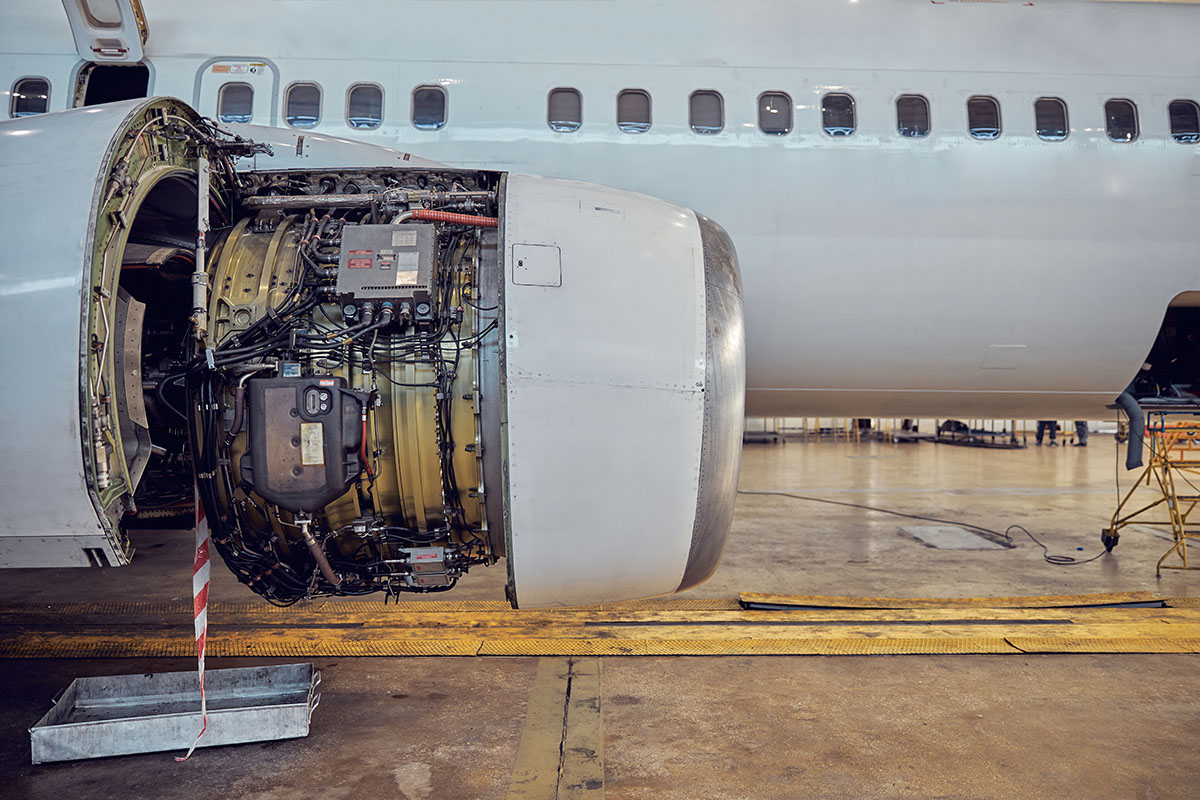
The strongest numbers came from aviation. GE Aerospace reported on October 20 that orders in its Commercial Engines and Services business rose 58% and revenue rose 21%, with internal shop visit revenue up 12% and spare parts revenue up more than 20%. The company said it had achieved record internal shop visit output in the quarter, put its commercial services backlog at more than $170 billion, and said segment profit growth came from higher services volume and price, partly offset by mix and inflation. Chairman and chief executive Larry Culp said: “We are raising our 2026 guidance across the board, and we now expect 2027 commercial services to grow low-double-digits.”
Caterpillar showed the same pattern on the ground. In its third-quarter release on October 29, sales and revenues rose 17% to $20.7 billion. Within Power and Energy, Power Generation sales rose 30% on turbines, turbine-related services and large reciprocating engines, mainly for data centres, and Oil and Gas sales rose 13% on reciprocating engine aftermarket parts and gas compression engines. Even in Rail, where sales fell 5% on lower international locomotive deliveries, higher rail services partly offset the decline. The common thread is equipment that is being asked to run harder and longer, which wears it out faster and pulls parts and service work forward with it.
The commercial truck market shows the other side. Truck dealer group Rush Enterprises reported on October 27 that total revenue rose 12.4% to $2.113 billion and that new Class 8 truck sales rose 24.4% to 3,880 units. Its parts, service and collision centre revenue grew a more modest 5.8% to $679.9 million. In the company's earnings release, chief executive W.M. “Rusty” Rush said Rush was encouraged by improved aftermarket demand, but added that the aftermarket recovery had not been as robust as the increase in demand for new commercial vehicles. The dealer's absorption ratio, which measures how much of its fixed overhead the parts and service business covers, slipped to 128.3% from 129.3% a year earlier.
New trucks are selling while existing fleets are not yet running hard enough to wear through parts at the old rate. A transportation equipment manufacturer responding to the Dallas Fed's October manufacturing survey said fuel pricing and the rising cost of domestic product were dramatically tempering a recovery in the freight market. The same survey's raw materials prices index stood at 55.3, roughly double its series average of 28.1, which means parts that do get ordered are costing more to make.
Process industries sit between the two. Honeywell Technologies said on October 22 that in its Process Automation and Technology segment, project sales grew 14%, led by liquefied natural gas and petrochemical projects, while aftermarket sales grew 4%, driven primarily by refining demand. In Building Automation, building solutions grew 4% with continued strength in services. Capital projects are moving faster than the service work on the equipment already installed.
Where the aftermarket is booming, the limit is supply. GE said material input from its priority suppliers rose by double digits on a year earlier, the tenth consecutive quarter of sequential growth, and that it had agreed to acquire Consolidated Precision Products to expand castings capacity. When an equipment maker buys a castings supplier to secure spare parts output, plants and fleets that depend on similar components should assume allocation will favour the customers with the largest service contracts. Caterpillar also reported $208 million of unfavourable manufacturing costs in Resource Industries, mainly from higher material costs including tariffs, a reminder that parts are getting dearer to produce even where demand is soft.
For an equipment maker, these results argue for planning the aftermarket by customer utilisation rather than by last year's run rate. For a plant or fleet, they argue for knowing which of your own assets sit in the busy lanes, where spare parts compete with data centres and airlines, and which sit in the quiet ones.
The third quarter did not show a single aftermarket boom. It showed several aftermarkets moving at the speed of the equipment they serve. Service organisations that read utilisation in their own installed base, and plan parts and people around it, will be ready for the next shift in demand rather than surprised by it.


Guide
Q3 showed parts demand surging where equipment runs flat out and lagging where fleets sit idle, so pricing and stocking on instinct leaves money behind in both. This guide sets out how leading service organisations use data on parts pricing, dealer networks and service coverage to plan for that split.
Download

Report
When record shop visit output and faster turnaround become part of the service offer, every job a technician closes and invoices counts toward margin. This report shows how to measure the return on digital field workflows in reduced rework, faster invoicing and less administration.
Download

Guide
GE needed ten straight quarters of rising supplier input, and a castings acquisition, to keep its spare parts flowing. This guide shows how procurement and operations teams use supplier and contractor qualification to build a supply base that performs reliably when demand surges.
Download