More than 70% of industrial organisations say they are confident in their AI safety and data policies. Only 11% have validated AI outputs for safety-, quality- or mission-critical processes, and just 4% require a person to approve the decisions AI supports.
AI has moved out of the pilot room and onto the production floor faster than most operations leaders expected. The returns being reported are large, and the confidence is larger. What has not kept pace is the plain engineering discipline that every other change to a production process has to pass: proof that the output is right, a named person who signs it off, and operators who know what the system is doing and when to overrule it.
The IFS Industrial Index 2026, published on October 13 and based on more than 2,200 senior decision-makers in 14 countries, finds that over 90% of organisations report significant gains in reliability and performance from industrial AI. The index puts improvement in first-time-right performance at 93%, in asset availability at 90% and in on-time delivery adherence at 88%. Respondents also report saving more than half of employee time across workflow areas such as production throughput and quality assurance.
The governance figures sit in sharp contrast. More than 70% of organisations say they are confident in their safety and data policies. Yet only 11% have validated AI outputs for safety-, quality- or mission-critical processes, only 11% have controls for AI use involving sensitive or export-controlled data, and just 4% require mandatory human oversight or approval for decisions that AI supports. Only 20% have embedded industrial AI in supply chain management or maintenance planning, which suggests most deployments are still running alongside core planning systems rather than inside them.
IFS itself frames the risk in operational terms. "Industrial operations are defined by speed and consequences," said Cathie Hall, the company's chief product and customer officer. On a production line, an unvalidated recommendation does not stay in a report. It changes a setpoint, releases a batch or passes a part that should have been held.
Oversight on a plant floor ultimately depends on the operator who can recognise a bad call. The National Association of Manufacturers' second-quarter Manufacturers' Outlook Survey, which drew 215 responses between May 12 and 28, found that 41.4% of respondents provide no AI-related training to frontline manufacturing workers, and a further 7.6% were uncertain. Among those that do train, 78.5% offer introductory or awareness-level content, 36.4% train workers to operate AI-enabled machines, equipment or software, and 26.2% provide advanced or role-specific training. Asked what AI skills frontline workers will need, 22.6% said it was too early to tell.
The Manufacturing Institute's reading of those results describes the 41.4% as manufacturers that have yet to act on AI workforce training at all. The IFS index points the same way from the top down: the leading AI effort among executive teams was upskilling management in AI literacy, cited by 41%, while 37% had upskilled peers to use industrial AI tools and 36% had trained staff to work alongside digital workers. Meanwhile 43% said they had trained and introduced agentic digital workers into daily operations in the past 12 months.
That is the gap in one line. Software agents are being onboarded into operations at a faster rate than the people expected to supervise them are being trained to do so.
Quality is the function where AI has spread fastest, and where an unchecked output is most expensive. Octave's 2026 Pulse of Quality in Manufacturing, a Censuswide survey of 2,263 managers and directors in the U.S., U.K. and Germany, found that 47% now use AI in quality processes, up from 33% in 2025. Defect detection is among the top three use cases at 44%, behind document automation and training.
The same survey shows why validation matters. Three-quarters of respondents had a product recall in the past five years, and 59% put the cost of each recall at between $10 million and $49.9 million. And 78% said they are affected by labour or skills shortages, with 85% saying those shortages hurt product quality. A plant short of experienced inspectors is exactly the plant most tempted to let a vision system make the call alone, and the plant least able to notice when that system starts drifting.
The plants pulling ahead on AI will not be the ones that deploy fastest. They will be the ones that can show, for every critical decision a model touches, that the output was checked, that a person owned it, and that the crew on the floor knew enough to catch it when it was wrong.
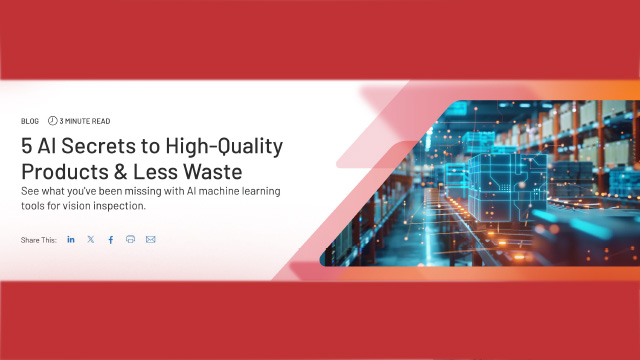

Guide
With 47% of manufacturers now using AI in quality and only 11% validating its outputs, the approach matters as much as the adoption. This guide covers the inspection and defect-detection practices that are delivering measurable results on real lines.
Download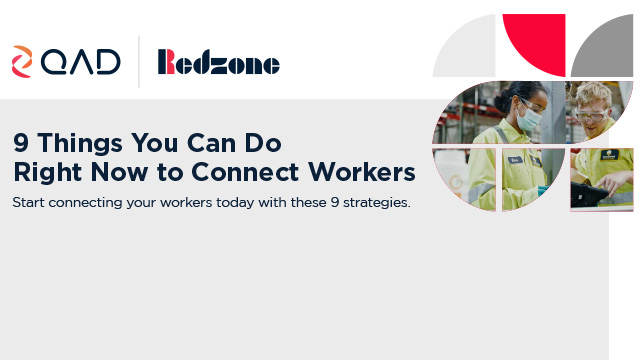

Guide
An operator who overrules a bad AI call only helps if that judgement reaches the next shift. This guide sets out nine practical steps for carrying frontline knowledge and quality concerns across handoffs, most of them needing no new budget.
Download

Guide
Only 11% of industrial organisations control how AI handles sensitive data, even as new tools connect into the control layer. This guide explains the security architecture that keeps HMI and SCADA environments protected as those connections multiply.
Download