Ninety percent of manufacturers now call digital transformation essential, yet only 43 percent of the data they collect is used effectively. The gap is not a technology problem, and the operations leaders closing it start with the people expected to run the systems.
Manufacturers have stopped debating whether to digitise. In the 2026 State of Smart Manufacturing Report, published in May, 90% of respondents said digital transformation is essential to staying competitive, 59% were already using smart manufacturing technology in live operations, and only 18% remained in pilot mode. Spending confirms the shift: roughly one-third of operating budgets is now directed at industrial technology. And yet the same study found that just 43% of the data these organisations collect is being used effectively. That gap, between what a plant can now measure and what it actually acts on, is not a hardware problem. It is a question of whether anyone on the floor has been given the skills, the time and the tooling to turn a signal into a decision.
The Rockwell Automation study, conducted by Sapio Research, surveyed 1,560 respondents across 17 of the largest manufacturing countries, spanning companies from $100 million to more than $30 billion in revenue. Its picture of the technology layer is one of genuine maturity rather than experiment. A third of operations (34%) are already augmented by artificial intelligence or machine learning, supporting functions including quality, cybersecurity and process optimisation, and respondents expect more than half of operations to be AI-supported by 2030. The risk surface has matured with it: 46% reported at least one cyber incident in the preceding year.
What has not kept pace is absorption. A plant can install sensors far faster than it can build the judgment required to interpret them, and the 43% data-utilisation figure is the clearest published measure of that lag. Blake Moret, chairman and chief executive of Rockwell Automation, framed the pressure plainly in the report's announcement: "Across the industry, manufacturers are facing more complexity and pressure than at any point in the last decade." Complexity is the operative word. Every layer of instrumentation added to a line raises the skill floor for the people who have to run it.
The supply side of that equation is well documented and unforgiving. Research from Deloitte and The Manufacturing Institute found that US manufacturing could need as many as 3.8 million new employees by 2033, with up to 1.9 million of those roles going unfilled if the skills and applicant gaps are not closed. In the same study, drawn from a survey of more than 200 US manufacturers alongside senior executive interviews, 65% of respondents named attracting and retaining talent as their primary business challenge. Demand is not simply for more hands but for different ones: the study recorded a 75% increase over five years in demand for simulation and simulation software skills.
The maintenance trades show the squeeze most clearly. Manufacturing Dive reported that the 270,000 industrial machinery maintenance technicians working in 2022 are projected to grow by 16% by 2032, a rate that outpaces the training pipeline feeding it, although there are signs the pipeline is adapting: certificate awards in manufacturing programmes grew more than four times faster than associate degrees between 2011 and 2022.
None of this is a story about people being engineered out. Deloitte's 2026 Manufacturing Industry Outlook projects that more than 81% of task hours in manufacturing will remain human-driven, even as physical AI deployment is expected to more than double, from 9% of manufacturers today to 22% within two years. Executives appear to understand where that leaves them. In a 2025 Deloitte survey of 600 manufacturing executives, the top concern for more than a third was equipping workers with the skills and knowledge to maximise the potential of smart manufacturing and operations.
The organisations making progress have stopped treating reskilling as a human resources programme and started running it as an operational capability with a budget line and a schedule. It is already more common than the shortage narrative suggests: coverage of the 2026 State of Smart Manufacturing Report notes that, on average, 41% of workforces had participated in reskilling programmes in the past year. The distinction that matters is sequencing. Plants that train after deployment inherit the 43% data-utilisation problem. Plants that train alongside deployment tend not to.
The retention mathematics reinforce the same conclusion. Deloitte and The Manufacturing Institute found employees are 2.7 times less likely to leave if they can acquire the skills they need, and 47% of manufacturers identified flexible working arrangements as the single most impactful retention measure available to them. Training is therefore doing two jobs at once, raising the capability to use the technology and reducing the churn that erodes it. Set against Deloitte's finding that 80% of manufacturers plan to put a fifth or more of their improvement budgets into smart manufacturing, the case for funding the workforce side of that investment is straightforward arithmetic.
"Companies who invest in upskilling the workforce through training, technology and policies that meet employee expectations are well-positioned for future growth."
John Coykendall, Principal, Deloitte Consulting LLP and Vice Chair, US Industrial Products and Construction


Guide
Against a projected 1.9 million unfilled roles, this guide sets out five practical moves for holding the frontline headcount a smart manufacturing programme depends on.
Download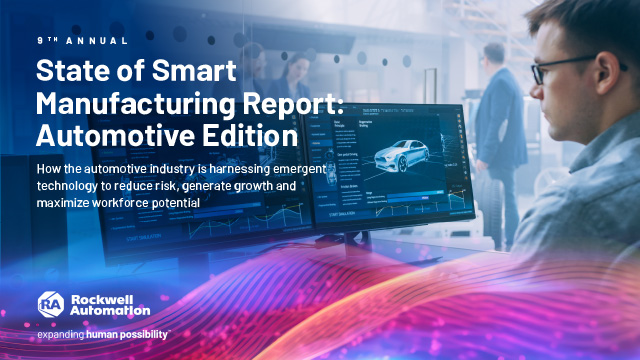

Report
The full study behind the 90% and 43% figures quoted above, including the country and sector breakdowns that show where data utilisation is furthest behind.
Download

Guide
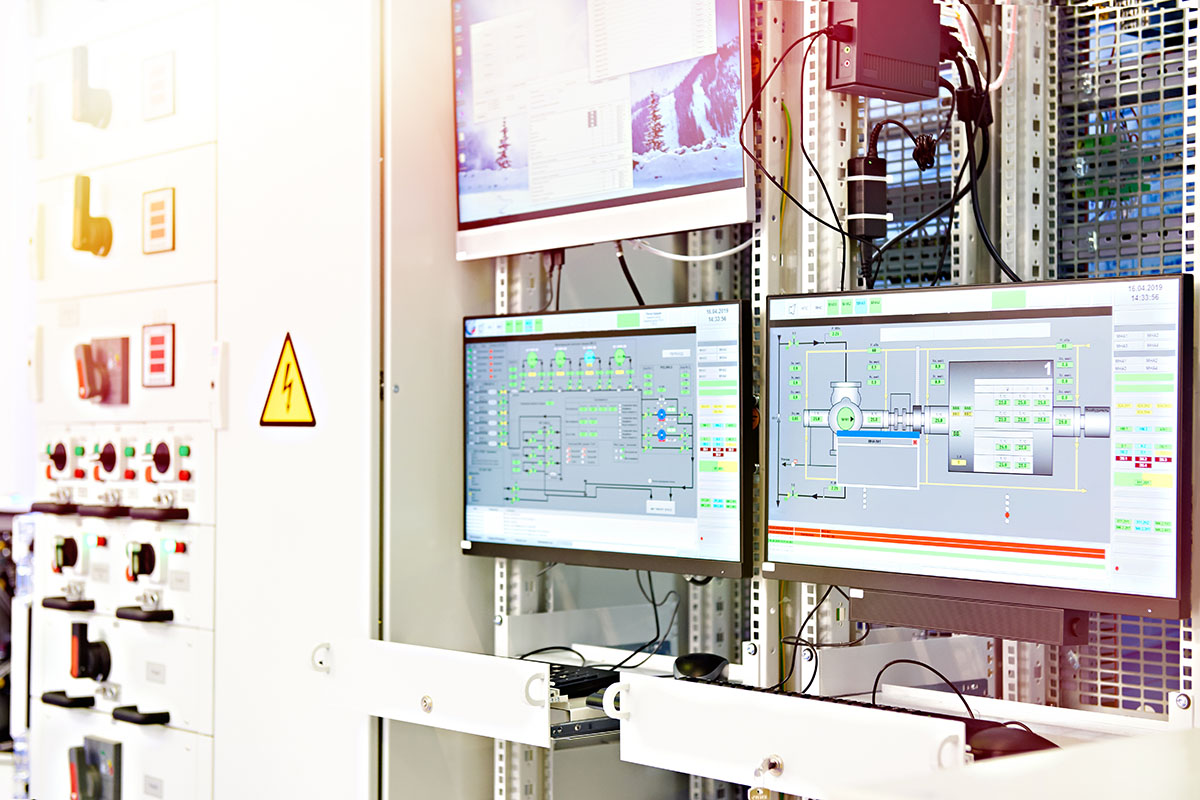
If 81% of task hours stay human, the SCADA layer is where reskilling either lands or fails. Ten criteria for judging whether yours helps operators act on what it shows.
Download