Permit approval timelines have lengthened by an average of 14 months over the past five years. Operations teams that have learned to work the system proactively are completing projects on schedule while competitors wait.

Key Takeaways
The economics of industrial capital investment have always depended on predictable timelines. When a refinery expansion, a new semiconductor fab, or a chemical processing unit takes three years longer to permit than the project plan assumed, the financial consequences extend well beyond delay costs. Financing terms reset. Equipment delivery schedules break. Competitors that moved faster capture market position that cannot be recovered. What has changed over the past five years is the degree to which permitting delay has become a primary driver of project failure, not a secondary inconvenience.
The first and most significant cause is agency staffing. The Environmental Protection Agency, the Army Corps of Engineers, and state environmental agencies collectively lost between 15 and 25% of their permitting staff between 2020 and 2024 through a combination of budget constraints, retirements, and competition from the private sector for environmental scientists and engineers. The positions that were vacated were disproportionately held by mid-career technical reviewers with the institutional knowledge to process complex applications efficiently. Replacement hiring has lagged, and where new staff have been brought on, training timelines for complex permit categories run 12 to 18 months before a reviewer can handle major applications independently.
The second cause is scope expansion under the National Environmental Policy Act. NEPA review requirements have been interpreted with increasing breadth over the past decade, adding cumulative impact analyses, environmental justice assessments, and climate impact modelling to review scopes that previously focused on direct project effects. Each additional analysis layer adds documentation burden for applicants and review burden for agencies, and each creates a new avenue for procedural legal challenge. The third cause is litigation exposure. Environmental advocacy organisations have become increasingly sophisticated at identifying procedural vulnerabilities in Environmental Impact Statements and using legal challenge to extend review timelines indefinitely. The threat of litigation has prompted many agency reviewers to add documentation steps proactively, further extending timelines even when no lawsuit is ultimately filed.
The combined effect is a permitting environment where the median timeline for a major industrial permit has risen from 8 months to 22 months, and where the variance around that median has grown substantially. Projects that would previously have faced a 6-to-12-month review window now face a 12-to-36-month range, with outliers extending to four years or beyond. For project planning purposes, that variance is as damaging as the median increase itself.
The organisations completing permitted projects on schedule are not operating in a different regulatory environment. They are applying a set of practices that reduce timeline variance and accelerate agency review at each stage of the process. The most impactful practice is the pre-application meeting. Regulatory affairs teams at proactive companies schedule formal pre-application conferences with reviewing agencies 12 to 24 months before submission, using these sessions to clarify the scope of required studies, identify likely agency concerns, and establish informal relationships with lead reviewers. Agencies generally welcome pre-application engagement; it reduces incomplete submissions and the subsequent request-for-information cycles that are among the single largest sources of calendar delay. Companies that use pre-application meetings consistently cut average total review time by 20 to 30% compared with those that submit cold applications.
Phased permit submissions are a second high-value practice. Rather than submitting a single comprehensive application that reviewers must process in full before issuing any determination, experienced permitting teams structure applications in phases. Early phases address the most straightforward approval categories, generating partial approvals that allow engineering and site preparation work to proceed while subsequent phases remain under review. Community engagement is the third differentiator. Permit challenges by local residents and advocacy groups are a leading cause of NEPA scope expansion and administrative delay. Proactive companies run structured community engagement programmes before application submission, identifying concerns early, incorporating design modifications where feasible, and building documented records of public consultation that provide procedural protection against later challenge. Organisations that treat community engagement as a risk mitigation investment rather than a public relations obligation consistently report shorter review timelines.
"The companies we see stuck in multi-year permit limbo almost always share one characteristic: they treated the permit as something that happens to the project rather than something the project team actively manages. Regulatory affairs needs a seat at the table during project scoping, not after the engineering design is locked."
Marcus Ellerbee, Vice President of Regulatory Affairs, Coburn Industrial Advisors
The operational shift required is fundamentally one of sequencing. Most industrial project planning models treat permit approval as a gating event that must be resolved before substantive project work begins. That model made sense when median timelines were measured in months. At 22 months median and climbing, it is a structural liability. The organisations with the strongest project delivery records have replaced the gating model with a parallel-track model, in which engineering design, community engagement, environmental studies, and permit applications proceed concurrently, with design documentation maintained in a form that can be updated as regulatory feedback is received. This requires more coordination between project teams and regulatory affairs functions, but it is the only planning model that produces reliable delivery timelines in the current environment.
The fundamental reorientation required is one of resource allocation. Most industrial organisations have increased engineering and procurement investment over the past decade while keeping regulatory affairs staffing flat. Given that permit delay is now the most common cause of major project schedule overrun, the investment case for expanding regulatory affairs capacity is straightforward. Companies that have made this investment are not navigating a better regulatory environment; they are navigating the same environment more effectively.


Guide
Ten often-overlooked compliance exposures in contractor and supplier relationships, with practical guidance on how to surface and address each one before it becomes an incident or a penalty.
Download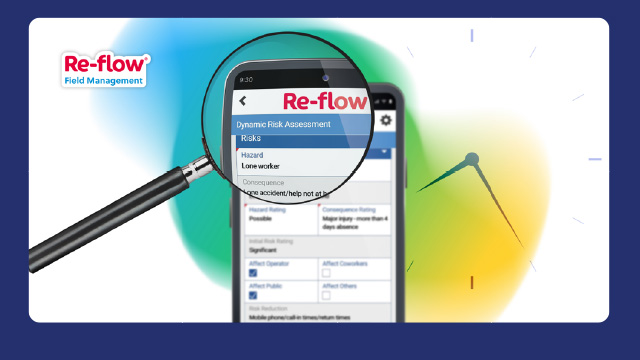

Guide
How digital field management tools create a continuous, timestamped record of activity that keeps operations ready for regulatory reviews and compliance audits at any time.
Download

Guide
The security frameworks and design principles that keep industrial control environments compliant with regulatory standards as automation expands across the floor.
Download

More articles coming soon
Subscribe to get every new article delivered straight to your inbox.
Subscribe →