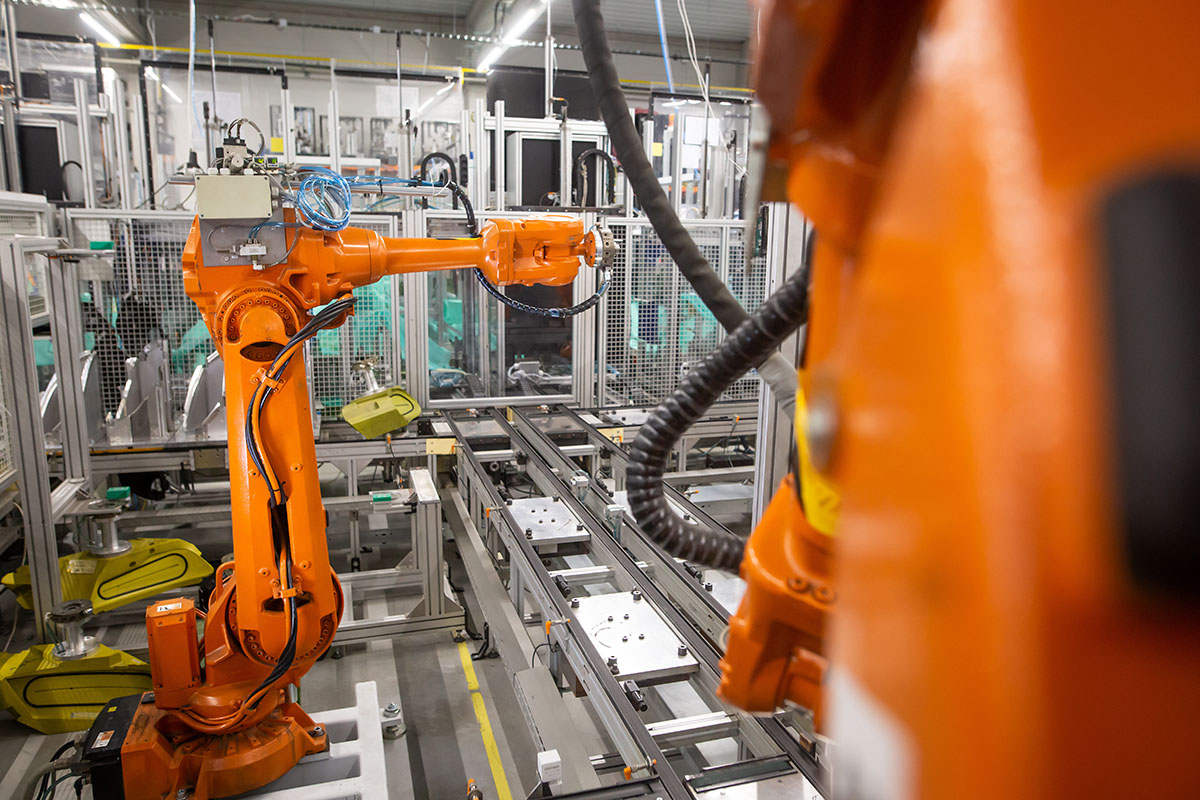
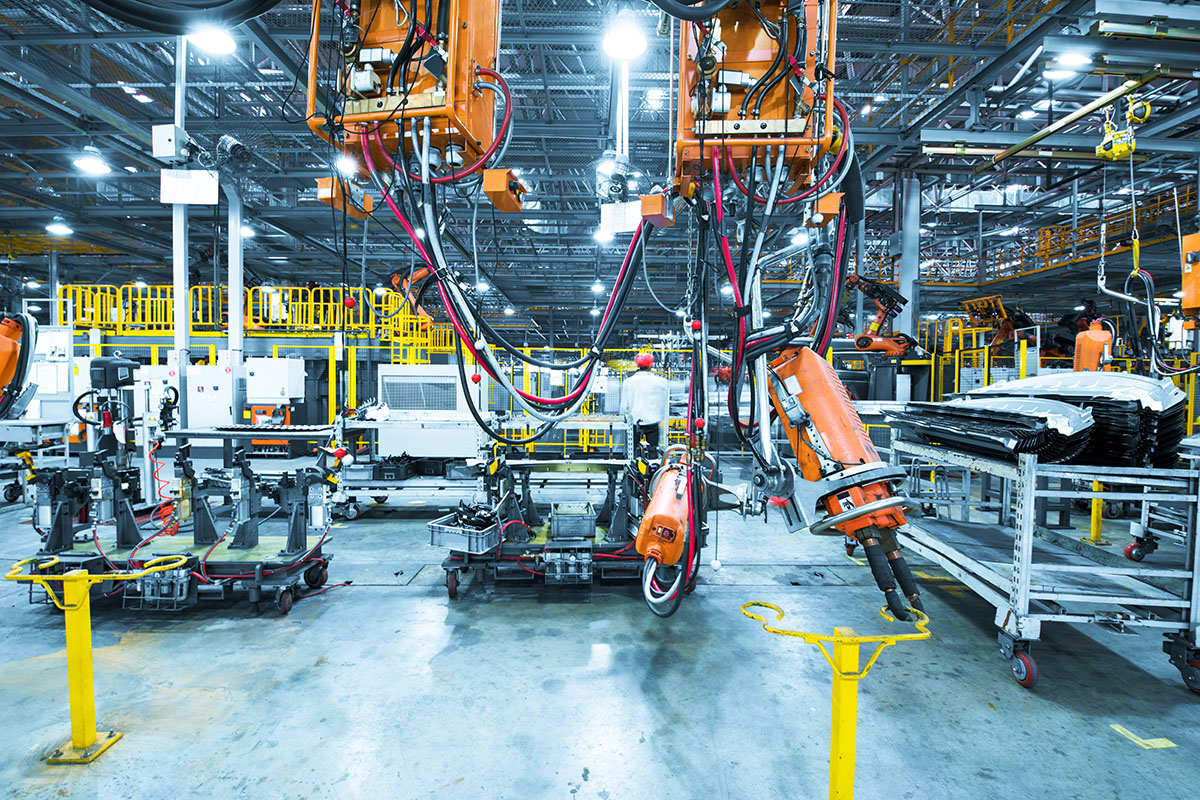
General Motors wants 20% more robots and automation in its North American plants by 2028, and it is asking the suppliers that bid for its work to show automation plans of their own. The top of its maturity scale describes integrated, adaptive plants run largely on data. Most manufacturers are not yet using the data they already collect.
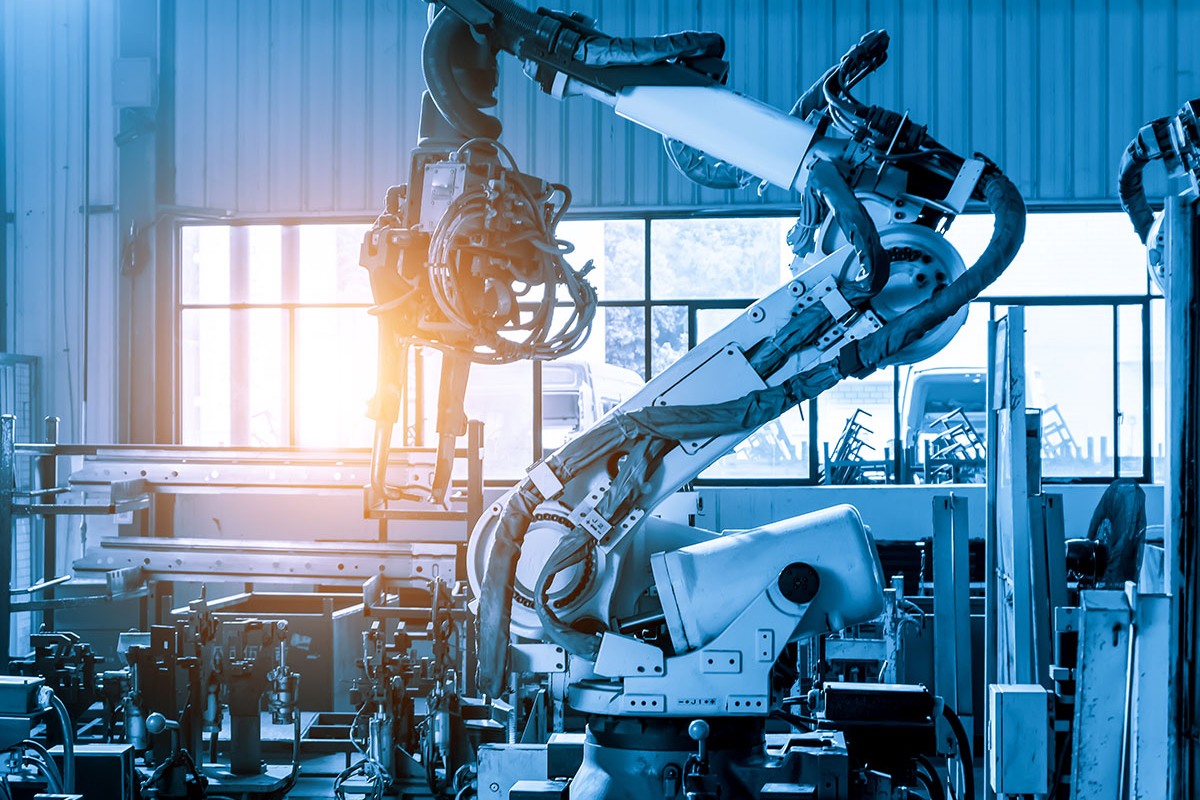
For years, an automaker's automation plans were its own business. Suppliers watched the robots arrive in assembly plants and quoted parts on whatever basis they could defend. That is changing. General Motors is now treating the level of automation inside its suppliers' plants as something it measures, scores and considers when it hands out work. The scale it uses runs from manual labour to the self-adjusting smart factory, and the higher rungs depend less on how many robots a plant owns than on whether its machines, systems and data work together. On that measure, most of manufacturing has a long way to climb.
On November 17, Reuters reported that GM aims to increase its use of robots and other automation by 20% at its North American factories by 2028, citing two people familiar with the matter. The carmaker is developing some robots of its own and assembling them at its plant in Kokomo, Indiana, with a focus on autonomous mobile robots that move parts around its plants, while still buying robotics equipment from outside suppliers. GM said last year that it had about 100 roboticists, AI engineers and hardware specialists working on advanced robotics.
The pressure behind the plan is cost. GM has said its 2023 contract with the UAW adds about $575 in labour cost per vehicle; Ford put its own figure at $900. The UAW's contracts with GM, Ford and Stellantis expire in 2028, the same year as the automation target. GM says it uses automation to improve safety, quality and efficiency, and that "we continue to put these technologies to work in ways that support our manufacturing teams." Laurie Harbour, an automotive partner at Wipfli, described the aim as "putting less hours into the production of the vehicle."
The part of the report that reaches furthest is the supplier requirement. According to the same people, GM asks suppliers bidding on new contracts for their automation plans and uses a scorecard to rate those efforts. For a parts maker, that turns automation from an internal cost decision into part of the bid itself, judged alongside price, quality and delivery.
The scorecard builds on a programme GM began rolling out in March. As CarScoops reported in July, citing Crain's Detroit Business, GM's Overall Automation Maturity Index asks major suppliers to grade their own operations on a five-point scale, auditing themselves against GM's criteria from raw material purchasing through production to final delivery. GM is also auditing some supplier plants directly. The five levels run from manual work through basic mechanisation, semi-automation and integrated automation to a smart factory with adaptive automation. People familiar with the matter told Crain's that GM is targeting 4.5 out of 5.
A perfect score describes a plant with very few people doing hands-on production, where humans act mainly as supervisors, planners and managers of exceptions. GM says the index is not a mandate and that there is no single deadline. "Our suppliers determine how best to run their operations," spokesman Patrick Sullivan told Crain's. Some supplier executives nonetheless expect that falling short could cost them future business, and suppliers have raised concerns about what the upgrades will cost, who pays for them, how any savings are shared with GM, and whether automation fits every plant.
The structure of the scale matters more than the headline target. Moving from manual work to mechanisation is largely a capital question: buy the equipment, install it, train the crew. The jump from semi-automation to integrated and adaptive automation is different. It requires machines that report their state, systems that coordinate material flow between them, and plant software that turns that information into decisions. That is where most manufacturers are weakest.
Rockwell Automation's 2026 State of Smart Manufacturing report, which surveyed more than 1,500 manufacturers across 17 countries, found plenty of activity. As Automation World summarised it, 90% of manufacturers consider digital transformation essential, 59% report actively using smart manufacturing technologies to support operations, and only 18% remain in pilot mode. About a third of operating budgets remain dedicated to industrial technology.
The weak point is what happens to the information those technologies produce. Only 43% of data collected is being used effectively, according to the report, and 34% of manufacturers describe themselves as AI-augmented today. A plant can install robots and sensors and still sit in the middle of GM's scale if its equipment runs as isolated islands, with production status relayed by radio and clipboard. The same survey found 46% of manufacturers experienced at least one cyber incident in the past year, a reminder that connecting more equipment also widens what has to be protected.
For suppliers, that means a credible automation plan is less a shopping list than an integration plan. GM's own focus on mobile robots that move parts is a case in point: autonomous material handling only pays off when it knows what each station needs and when, which depends on the plant's supervisory and execution systems talking to each other. The same is true of the rollout itself. New equipment that the floor does not trust, or that sits beside unchanged paper processes, adds cost without adding maturity.
Whether or not a plant supplies GM, customer scorecards for automation are likely to spread. Suppliers can prepare before the question appears in an RFQ.
GM's 20% target will make headlines because of what it means for its own workforce and its 2028 talks with the UAW. For the thousands of plants that feed its assembly lines, the scorecard is the more immediate change. The suppliers that score well will not necessarily be the ones that bought the most robots, but the ones whose machines, systems and data already work as one operation.


Guide
GM is concentrating its own automation on moving parts between stations. This guide shows how intelligent transport systems handle mixed-model flow, the kind of material handling upgrade that lifts a supplier plant up an automation maturity scale.
Download

Guide
The step from semi-automation to integrated automation depends on a supervisory layer that ties isolated machines together. This guide sets out what separates a modern SCADA platform from the legacy systems holding many plants in the middle of GM's scale.
Download

Guide
A customer scorecard rewards automation that crews actually use, not equipment sitting beside paper processes. This guide covers the planning, rollout and change management steps that decide whether a digital programme is adopted or resisted.
Download