Final-mile costs now represent more than 53 percent of total shipping spend for most distributors. We look at how the best operations teams are redesigning their last-mile networks from the ground up.
Key Takeaways
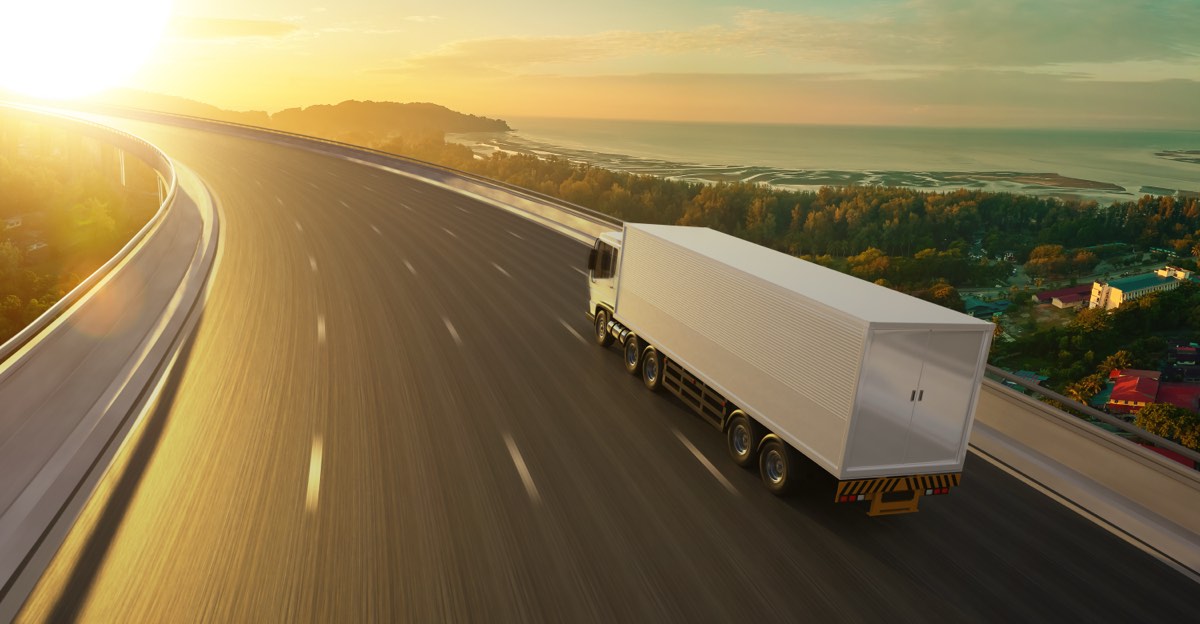
Final-mile delivery has always been the most expensive segment of the supply chain. What has changed is the rate at which those costs are compounding. For most distributors, the last mile now accounts for more than 53 percent of total shipping spend, a figure that has climbed steadily as urban congestion thickens, labour markets tighten, and consumers normalise same-day delivery as a baseline expectation rather than a premium service. The operations teams that are managing this pressure effectively are not simply negotiating harder with national carriers. They are redesigning their final-mile networks from the ground up.
The economics of final-mile delivery were built on assumptions that no longer hold. Hub-and-spoke carrier networks were optimised for parcel density in suburban corridors, where a single driver could complete sixty to eighty stops on a compact loop. Urban delivery economics look nothing like that model. Stop density in dense metros is theoretically high, but building access restrictions, loading zone scarcity, traffic unpredictability, and receiver availability windows fragment routes in ways that national carriers price poorly and execute inconsistently.
Labour is the deeper structural problem. Driver turnover at major parcel carriers has run above 35 percent annually for three consecutive years, and the pipeline of commercial driver's licence holders entering the market is not keeping pace with attrition. That labour scarcity translates directly into service failures: missed delivery windows, elevated redelivery rates, and the downstream customer service costs that rarely appear in the headline cost-per-package metric but accumulate at the margin.
Consumer expectations have compounded both problems simultaneously. The shift from two-day to same-day as the competitive standard has compressed the planning horizon for outbound fulfilment to a point where traditional batch-and-dispatch routing cannot generate routes with sufficient density to cover delivery cost. The result is a model where volume growth does not produce the unit-cost improvements that distributors historically relied upon.
The distributors achieving cost-per-delivery reductions in the 18 to 24 percent range are applying a consistent set of structural interventions. The first is route density optimisation using dynamic routing software that sequences stops in real time against live traffic, driver location, and delivery window constraints. Static route assignments, planned the night before and unchanged through the delivery day, leave 15 to 20 percent of potential route efficiency on the table. Platforms from providers such as Onfleet, Route4Me, and project44 now integrate telematics, receiver availability signals, and real-time congestion data to compress that gap.
The second intervention is network proximity. Micro-fulfilment centres, positioned within eight to twelve miles of high-density urban demand clusters, fundamentally change the outbound route equation. By staging inventory closer to the point of delivery rather than dispatching from a regional distribution centre thirty or forty miles out, distributors cut trunk-haul distance from the fulfilment point to the first delivery stop. That reduction, which looks modest on a map, can lower same-day delivery cost per order by 20 to 30 percent when compounded across hundreds of routes daily. Several industrial distributors have co-located micro-fulfilment capacity inside third-party warehouse facilities to avoid the capital requirement of purpose-built assets.
We stopped treating last-mile as a carrier procurement problem and started treating it as a network design problem. Once we placed micro-fulfilment nodes inside our three highest-density metro markets, our same-day cost per delivery dropped by 26 percent in the first two quarters. The carrier mix question became much easier to answer once the geography was right.
Sandra Okafor, Vice President of Logistics Operations, Meridian Industrial Supply
Carrier diversification is the third structural lever, and it is increasingly non-negotiable for distributors serving multi-channel customers. Dependence on a single national carrier creates both cost and resilience risk. The distributors managing last-mile cost most effectively are operating across a tiered carrier mix: national carriers for standard next-day and two-day volume; regional carriers for same-day metropolitan coverage at lower base rates than nationals; gig-economy platforms such as Roadie or Shipt for surge capacity and residential overflow; and automated locker networks for the subset of orders where receiver flexibility can substitute for attended delivery.
None of the structural interventions above scale without technology infrastructure that can orchestrate carrier selection, route optimisation, and customer communication across a fragmented delivery network in near real time. The gap between distributors investing in last-mile technology platforms and those still managing carrier relationships through legacy transportation management systems has become the primary performance differentiator in the sector.
The most consequential technology investments are concentrated in three areas. Carrier orchestration platforms automate the assignment of each order to the optimal carrier based on service level requirement, delivery geography, current carrier capacity, and cost. Route optimisation engines, running continuously rather than in batch cycles, respond to intraday changes in traffic, driver availability, and order volume. Customer-facing visibility tools reduce inbound delivery enquiry volume, which carries a hidden cost of three to five dollars per contact that rarely appears in last-mile cost models but is real.
Locker networks deserve particular attention as a structural cost reduction tool rather than a convenience feature. When a distributor can shift 12 to 15 percent of residential deliveries to attended locker locations, the redelivery rate for that volume drops to near zero, and the carrier cost per package falls by 20 to 35 percent relative to attended home delivery. Industrial and B2B distributors serving contractors and field service teams are finding that job-site locker deployments reduce both delivery cost and the receiver coordination burden that drives failed first-attempt rates.
The distributors that treat last-mile as a static cost of doing business will continue to absorb margin compression as volume grows. Those redesigning their networks around density, proximity, and carrier diversification are finding that last-mile, despite its complexity, is one of the few areas in modern logistics where structural changes deliver measurable, durable cost reduction.


Guide
A practical guide covering the decisions and investments needed to build a distribution and service operation that maintains profitability through network disruption.
Download

Report
How field operations teams are converting data from digital workflows into improvements in route performance, faster exception handling, and reduced delivery cost.
Download

Guide
A structured approach to subcontractor qualification, oversight, and performance tracking across complex delivery environments where visibility often runs out several layers down the network.
Download
More articles coming soon
Subscribe to get every new article delivered straight to your inbox.
Subscribe →