A growing number of facilities are running automated production through the night with zero human operators. We visited three plants that have made the transition and documented exactly how they did it.
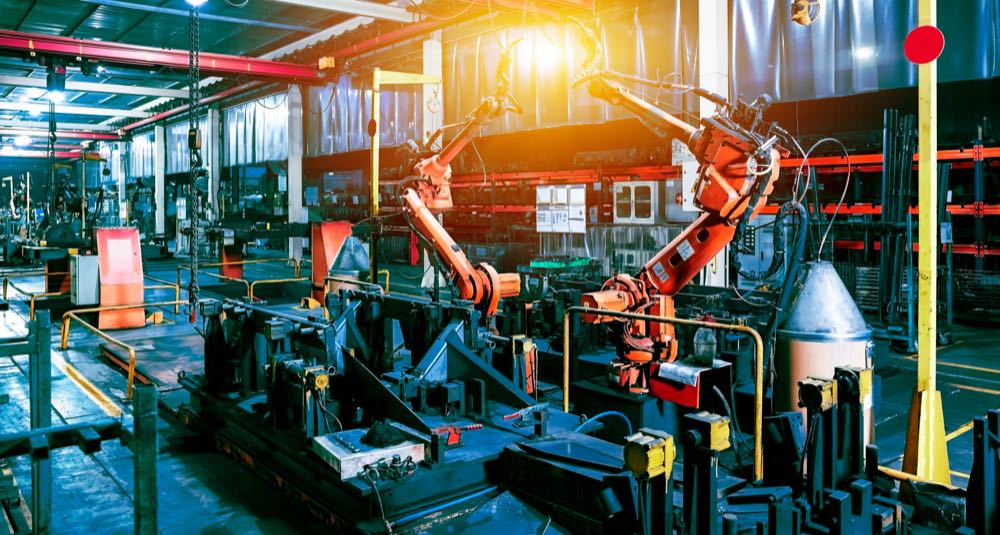
Seventeen percent of advanced manufacturers now operate at least one lights-out production shift per week, up from six percent three years ago. The number is striking not because automation is new, but because the threshold for genuine unattended operation, no operators on the floor, no technician inside the building, has historically been out of reach for all but the most capital-intensive facilities. That threshold is moving. The combination of affordable sensor hardware, maturing programmable logic controller ecosystems, and cloud-based monitoring has pushed lights-out production within reach of mid-sized plants that would have dismissed the concept a decade ago. This article documents what the transition actually requires, where it fails, and what it means for the people who used to work the night shift.
The term is frequently misused. A facility running a skeleton crew of two overnight technicians is not lights-out; it is understaffed. True lights-out operation means the production floor runs without any human present inside the facility during the shift. Machines load, process, inspect, and stage output autonomously. Faults that exceed the system's self-correction capability trigger a controlled shutdown and an alert to an on-call technician who assesses the situation remotely before deciding whether to enter the facility. The distinction matters because the engineering requirements for each state differ substantially: designing for remote assessment is a far higher bar than designing for fast human response.
At a precision machining plant in central Ohio that has run lights-out for 22 months, every CNC cell is equipped with in-process gauging that compares part dimensions against tolerance limits after each cutting cycle. Reject parts are automatically routed to a quarantine station. Coolant levels, spindle load, and tool-wear indicators feed into a central SCADA dashboard that the on-call engineer monitors from home. The facility runs lights-out from 10 p.m. to 6 a.m. five nights per week, producing roughly 40% of its monthly volume during those hours. Capital investment in sensor infrastructure and software integration ran to $2.3 million across three years. Annual labour savings on night-shift wages exceeded $900,000 in the first full year of operation.
A stamping and forming operation in the upper Midwest took a narrower approach, designating only its two highest-volume, most-stable product lines for unattended operation. The remaining lines still require overnight supervision. That selective model is increasingly common: lights-out as a mode applied to specific cells or product families rather than a facility-wide condition. It reduces risk during transition and allows teams to build competency before expanding scope.
Every facility that has sustained this transition shares a common starting point: process stability that is measurable and documented. Plants that attempted lights-out operation without first achieving consistent Cpk scores above 1.33 across critical process parameters report higher rates of unplanned shutdowns and, in several cases, scrap events that consumed projected labour savings within the first quarter. Stability is not an assumption. It is a prerequisite verified with production data spanning at least six months before the first unattended shift.
"We spent fourteen months hardening our processes before we ever considered running without operators. The automation hardware took eight weeks to install. The preparation took everything before that."
Sandra Okafor, Director of Automation, Meridian Precision Components
Beyond process stability, three infrastructure requirements appear consistently across every successful implementation. PLC firmware must support remote diagnostics and fault logging with timestamps granular enough to reconstruct event sequences after an unplanned shutdown. Sensor coverage must be comprehensive enough that no machine state can change without generating a logged signal: temperature, pressure, load, position, and consumable levels are the minimum set for most machining environments. And remote fault-response protocols must be written, tested, and drilled before the first lights-out shift runs. The plants that skipped protocol development and relied on engineer judgment during live incidents report significantly longer mean-time-to-resolution across every fault category studied.
The facilities that have sustained lights-out operation consistently followed a phased approach over 12 to 18 months. Phase one runs target machines in a "shadow" mode: operators remain present but do not intervene unless the automated systems fail to handle a fault correctly. This phase reliably surfaces gaps in sensor coverage and protocol logic that are invisible during normal supervised operation. Phase two reduces on-floor headcount to a single technician who stays in the building but does not actively monitor machines. Phase three moves the technician off the floor and into a separate control room. Only after each phase clears a four-week incident-free window does the team advance to the next.
The most common failure mode is not mechanical; it is informational. Plants that experience persistent problems with lights-out operation almost always trace the root cause to alert fatigue: dashboards generating so many low-priority notifications that on-call engineers begin to discount incoming alerts. The solution is not more alerts but better triage, configuring systems to escalate only faults that require human decision-making while suppressing notifications for conditions the control system can handle without intervention. Several facilities report that the engineering effort required to tune alert logic correctly rivals the effort required to install the sensor hardware in the first place.
Workforce implications are significant but not as disruptive as critics often predict. At the Ohio precision machining plant, all seven former night-shift operators were retrained and redeployed: three moved into a daytime maintenance and calibration role that had not previously existed, two joined the process engineering team working to expand lights-out scope to additional product lines, and two accepted voluntary redundancy with negotiated severance. No facility surveyed for this article reported involuntary redundancy without a prior redeployment offer. The accurate workforce story is role transformation, not elimination, though that framing should not obscure the fact that the new roles require meaningfully different skills than those they replaced.


Guide
Five ways manufacturers are using AI to improve product quality and reduce material waste, covering the applications delivering measurable results on production lines today.
Download

Guide
The security architecture behind modern HMI/SCADA systems and the frameworks that keep industrial control environments protected as automation expands across the floor.
Download

Guide
What a complete connected workforce solution looks like in a manufacturing environment, covering the technology and implementation approach that drive measurable production improvement.
Download

More articles coming soon
Subscribe to get every new article straight to your inbox.
Subscribe →